Monday, 27 February 2012

Fascinating and Childlike


Being fascinating and childlike is confusing. How do you do it? When I first started reading Fascinating Womanhood I also thought "How?!" because we are not brought up to be childlike or fascinating; we are brought up to be composed and independent. So I've decided to post some literary examples to help you better grasp the concept. These examples come from novels written by men and give us a glimpse into what these men find fascinating.

Below is an extract from David Copperfield written by Charles Dickens.

“She was a fairy and a sylph. She was more than human to me. I don’t know what she was, anything that no one ever saw and everything that everyone ever wanted. She had the most delightful little voice, the gayest little laugh, the pleasantest and most fascinating little ways that ever led a lost youth into hopeless slavery. She was rather diminutive altogether... She was too bewildering. To see her lay the flowers against her dimpled chin was to lose all presence of mind and power of language in feeble ecstacy.”... When David thought of her he said: “I could only sit down before the fire, biting the key of my carpet bag, and think of the captivating, girlish, bright-eyed, lovely Dora. What a form she had, what a face she had, what a graceful, variable, enchanting manner.”

From the novel and above passage we see that Dora fascinated David. She had an enchanting manner; she was childlike and girlish. She had tender little ways: the way she laid the flowers against her dimpled chin, patted the horses, or spanked her little dog fascinated him. She was radiantly happy. She was bright-eyed and dependent; hopelessly in need of masculine protection and guidance. This is a perfect example of captivating feminine girlishness. I'm sure we would all like to inspire such feelings of adoration in a man.

Wednesday, 8 February 2012

What to Study?


For those young readers who are reaching the end of their school careers choosing what to study after school is daunting. How can you choose what career to go into when all you know is your home-town, the school you go to and your friends? The world is so big and there is so much to discover; so much opportunity.

So how do you decide what to study? Personality tests are good; aptitude tests are good. These tell you where your interests lie and what you are good at, but also of importance is whether there is a market for your preferred career. What is the point of studying to become an elephant whisperer if there is no work for such a field in your country of residence? If you want to live in India, great become an elephant whisperer! But if you stay in Italy you are unlikely to find work after your gruelling three years of studying.

Here is my tip. As you start coming to the end of your school career take the personality test and take the aptitude test. But also look at the job market. Brows internet sites such as pnet.co.za or jobs.ac.uk or russianjobsonline.com. Don’t just do it once, go back every week for a couple of months. This will indicate who is employing and what vacancies there are in the job market. Sure, the job market changes over the years, but if your interest lies in design, study graphic design instead of fashion design if the job market is that way inclined.

If, however, you know exactly what you want to do go ahead! Follow your dreams, work hard and your passion will make you successful.

Tuesday, 7 February 2012

Dealing With Conflict


Early on in our married life I found we disagreed and fought more than half the week. There was a period of about four months when we experienced conflict in almost everything. Right now I can’t say I even remember what our “fights” were about, but at the time it was awful. We were opposing teams trying to live under the same roof.

The problem was we didn’t know how to handle conflict (as most of us don't!). It’s important to talk about what upsets you if you are to prevent resentment building, but once you have, what then? I remember telling J what bothers me, and afterwards we ended up looking at each other and blinking like owls, not knowing what to say next. Speaking to your partner about what bothers you is important and it is of utmost importance to come to a conclusion otherwise you will have the same fight over and over again.

Humility is key here. You have to hear your partner without interrupting him or getting defensive or blaming. This takes self-control because our natural tendency is to defend ourselves. Dealing with conflict is like ongoing negotiation. It is possible for both to win but you have to hear each other’s sides. You are a team. If you are the winner in conflict you are actually cancelling out the winning side with a losing side, which is your partner’s.

This is how to deal with conflict:

  • You mention your frustration and how, what Partner does, makes you feel. Don’t accuse Partner by saying “You always talk over me”. Rather say “It hurts me when you talk over me because it makes me feel unimportant and unappreciated”. This accuses the behaviour and not the person.
  • Give Partner a chance to sympathise and, if you are kind, voice his frustrations: “I understand that when I do that it makes you feel unimportant and unappreciated. I am sorry. I don’t mean to cause you such feelings. I feel like I don’t get a chance to speak because you have so much to say.” Partner then asks what you would like him to do to fix the problem.
  • You sympathise and tell Partner what you would like: “I didn’t know I don't give you a chance to talk. I am sorry. I would like you to give me a chance to finish what I am saying”. You then ask what you can do for Partner.
  • Partner responds and mentions what you can do: “Ok I won’t interrupt you anymore. I would like you to give me a chance to talk”.
  • You don't know when he wants to talk so you ask how you can do that.
  • Partner gives ideas for what can help: “Maybe I can squeeze your hand to let you know I also want to say something or I can look at you and say your name to grab your attention”.
  • You say: “Ok look at me and say my name and I will know you want to talk. I will then just finish what I am saying”.
  • So Partner will not interrupt you and you will give Partner a chance to talk. You both get what you want; you both win!

At the resolution of this conflict both parties know how the other feels and have come to an agreement as to how to fix the problem. Because there is a solution, this fight is closed and should not need to be repeated in the future. Also, both parties get what they want. This is constructive: it allows both parties to feel they are moving forward rather than being stuck and kept in bondage by unresolved conflict. 

Understand that this method is unnatural so you will need to be patient with yourself and with your parnter. It works both ways: you or he can initiate the process depending on who is unhappy. Discuss the techniques with him and give it a try the next time you have a disagreement.

Monday, 30 January 2012

Accomplishment: the measure of eligibility


In the 1800s it was of utmost importance to be educated and possess “good breeding”. Education provided intelligence of mind, and “good breeding” provided refinement and social grace; and these in turn provided the foundation for a woman’s eligibility for marriage (if she wanted to marry a gentleman that is). However, it was her accomplishments that made her prized by her acquaintances and helped her catch the eye of an admiring gentleman. It was these that positioned her as the most valued choice for marriage because she had beauty, intelligence and talent.

A woman who possessed any, or a number of accomplishments was intriguing and alluring. She could dance at the balls hosted by wealthy neighbours; she could provide entertainment for guests after they retired to the drawing room by playing music or singing; she could entertain her parents by reading poetry; she could write a good letter and paint. She was like a nymph: mysterious in all her talents.

The accomplishments she could have possessed include any or all of those listed bellow.

  • Playing the pianoforte
  • Singing
  • Dancing
  • Writing poetry or a good letter
  • Reading aloud
  • Drawing
  • Painting (usually with watercolour because this was seen as more feminine).
  • Speaking a foreign language such as Italian.

These talents above are classical and elegant. Is it not interesting that today - though the accomplishments we possess are not seen as a reflection of our eligibility but rather as a prized talent for personal enjoyment - we still admire them greatly? How often have we admired Joan’s ability to paint or wished we could play the piano (or any other musical instrument) like Mary? We also admire those who can speak a foreign language. And I myself have often wished I could sing like those in the church choir. Strange, we are less likely to admire the ability to play first team hockey or provincial squash. Could it be that classical talent retains its allure?

Accomplishment and refinement are still very much appreciated today. A woman’s ability to paint, sing or play music still gives those who know her great joy. She is viewed as one with exceptional talent, especially if her talent is more developed than another’s. Maybe it doesn’t make her more eligible but it certainly attracts attention... because really, we have not much changed since the ladies and gentlemen of Jane Austen’s time.

Thursday, 26 January 2012

Easier, Faster, Better


It is common knowledge that fruit and vegetables are healthy. But did you know that the skins and cores of these fruit and vegetables are even healthier? Many vitamins and minerals are found just below the skin so if you peel a potato or remove the skin from an apple you are actually shaving off a large portion of the nutrients you would be eating.

Many recipe books instruct us to peel the potato or take the skin of the tomato or remove the pips from a chilli. Why? Is it really going to make that much difference to the dish? I actually prefer potato salad with the skins included because it adds a nice texture and I know it’s healthier. 

After one evening bent over the chopping board tediously removing every seed from three chillies before chopping them, I decided: “No ways I’m not going to stand for hours making food”. The next time I made a chilli dish I chopped the chillies and threw them into the pot. What a surprise, I would never had known I’d added the seeds!

It’s easier, it’s faster, and it’s better to leave the skins on fruit and vegetables. It can cut down preparation and cooking time by a third depending on what you’re making. That leaves you with healthier food and more time to enjoy your family, your guests or reading your book!

Thursday, 19 January 2012

The Working Woman


Through my research (googling) of women taking the role of working mother versus housewife I came up with some very surprising, very interesting conclusions concerning the topic of the “working woman”. This is a basic summary of what I found though of course there are always exceptions.

From the time of Christ (and certainly since the beginning of time) up until the 1700s women did not work outside the home. They were employed to sew and take care of the children. Their education also consisted of basic reading and writing skills (varying over the ages depending on the era ie in the dark ages it was mostly only the wealthy and the monks who were educated). Women took care of their homes.


According to the writings of Jane Austen which focuses on life in the late 1700s and early 1800s women did not work. At best a woman without inheritance or who didn’t marry into wealth would become a governess (a type of live-in teacher) who educated the children of wealthy families in geography, literature, foreign languages and accomplishments such as the pianoforte or painting. Higher education was not available to women and at this time women were under the care of either their fathers or their husbands. They had no social or marital responsibility to work and earn a living.


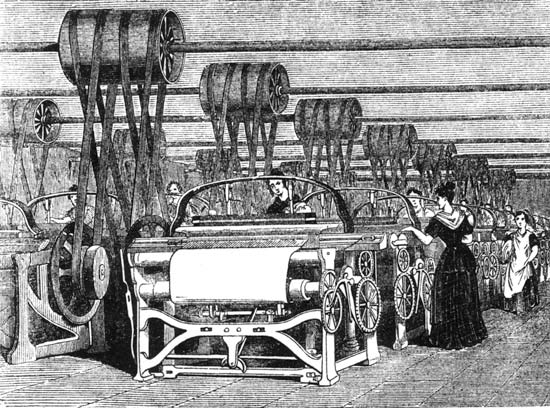
The start of women taking paid work came about in 1800s at the start of the industrial revolution. Women moved from the country where they worked on farms to the towns where they worked in factories. These women needed the money and were willing to take low pay in harsh working conditions.  Women still were not working as professionals.


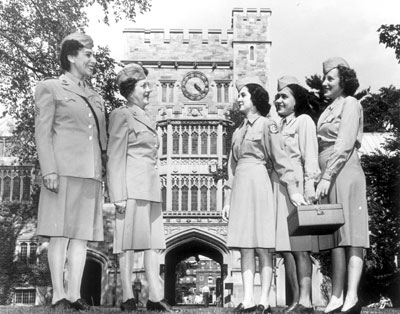
Up until about the 1950s women worked until they got married and had children. These jobs usually included nursing, teaching or secretarial work. At the start of World War 2 men went off to war and women were left to hold the fort. Labour was short and the government needed women to step into men’s jobs so that economies would not collapse. This seems to have started the trend of mothers leaving home to work, where previously it was mostly single women or widows who would work. This continues today with women taking ever higher paid jobs.

My conclusion is this: women have always been industrious whether they worked to clothe and feed their families or whether they worked outside the home to earn an income. Always industrious and always worthy. With the progression of time women have received better education and more options in terms of career, but at the same time seem to receive less care and regard from the men who should be caring for them. One side of the scale tips up; the other tips down. We pile onto the man's side of the scale and we all sink as a result (higher divorce rate; troubled teens; increased violence)... Again it comes down to masculinity and femininity: there are two sides to the scale. The question is, how does this scale balance in an environment where mothers work; how does it work in the society we have created today?

Tuesday, 17 January 2012

Out to research

Old Car. Found at http://www.123rf.com


My dear friend has tasked me with a very interesting topic: Tim McGraw said something very intriguing about his wife, Faith Hill: “She's a straight shooter, that's for sure. She doesn't take any *nonsense* from anybody.” Her point is that McGraw did not mention her beauty, intelligence or accomplishments but simply her character. So I'm researching the angelic character of a woman and I'm at the same time researching the role of women: working vs housewife. I was hoping to have posted something on these today but unfortunately there is just too much to write about! I'll try to have something up on the Fascinating Feminine page by the end of the week.

So long I'll leave you with a little appetizer... My new year’s resolution this year was to wear more skirts and dresses. In fact, I said I will only wear pants when it is too cold for a dress or when it is just too impractical. Needless to say my husband loves this and I have experienced, more than ever, him treating me like a lady.

This weekend we were at his parent’s house and we had quite a bit to do. I wanted to have my car washed but wasn’t sure there would be a car-wash open on a Sunday so J said he would wash it for me. I thanked him but said I would help him. I would hold the hose and run the water over the car while he washed it with soap and a cloth. Well, this was just not acceptable to him. I was not going to help him wash the car because my dress would get wet. So he sent me back inside to drink tea with mom-in-law!

As you start to wear more dresses does your husband or boyfriend start to treat you differently; does he treat you more like a lady? Do men in general treat you more like a lady? Please share to encourage other women with your stories!